
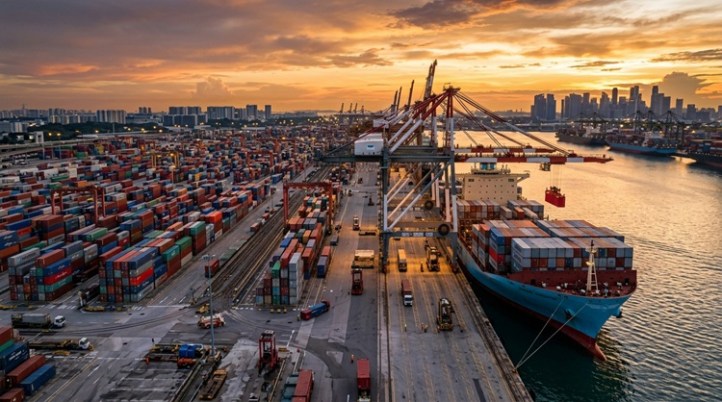
Shipping containers for sale in Singapore serve a far wider range of purposes than their origins in ocean freight might suggest. What was designed to move goods reliably across the world has become one of the most versatile and cost-effective structural units available for businesses, construction sites, and property developers across the island. Whether the requirement is temporary storage during a renovation, a site office for a construction project, or a converted retail or F&B space, the humble steel box has proved adaptable beyond any original expectation.
Why Containers Work So Well for Storage
The engineering that makes a shipping container suitable for stacking nine high on a cargo vessel at sea is exactly what makes it an outstanding storage solution on land. The corrugated steel walls, the reinforced corner castings, and the airtight door seals that keep seawater out do equally well at keeping humidity, pests, and intrusion out of stored goods. For businesses needing to store equipment, tools, documents, or materials in conditions that a fabric tent or a temporary shed cannot replicate, a steel container is a reliable upgrade.
Container storage scales easily. A single 20-foot unit holds approximately 33 cubic metres of volume and suits most small-to-medium storage requirements. A 40-foot unit doubles that capacity without adding any additional footprint management complexity. Multiple units can be placed side by side or stacked, with custom combinations arranged for larger requirements.
Used shipping containers for sale offer particular value for storage applications where the container will not need to move again. The condition of a used container is more than adequate for static storage, and the price difference against a new unit is material.
Construction Site Applications
Singapore’s busy construction and development sector is one of the largest users of shipping containers in the country. Site offices, tool stores, security booths, and welfare facilities are all commonly built from containers deployed at the beginning of a project and removed or relocated at its conclusion.
The advantages over purpose-built temporary structures are straightforward. A container arrives structurally complete and requires only connection to site services – power, water, drainage where needed, to be operational. At project completion, it can be loaded onto a truck and moved to the next site, the depot, or sold. The investment is recoverable in a way that a built structure on a leased site is not.
ISO-standard container units are the most common specification for site deployment, as their dimensions and corner castings allow stacking and crane handling using standard equipment that most construction sites already have on location.
Commercial and Retail Conversions
Singapore’s creative industries and food and beverage sector have found in shipping containers a building material that delivers industrial character at a fraction of the cost of conventional construction. Container restaurants, pop-up retail concepts, and event installations have become familiar features of the local scene, and the range of conversion possibilities has expanded as fabricators have developed more sophisticated techniques.
A converted container can accommodate full kitchen fit-outs, HVAC systems, insulation, and custom cladding. The structural shell provides a starting point that is already weatherproof and secure, reducing the scope of fit-out work compared with a structure built from scratch.
As former Prime Minister Goh Chok Tong once noted about Singapore’s entrepreneurial spirit, “Creative solutions are what drive Singapore forward, we turn constraints into opportunities.” Container conversions are a direct expression of that principle in built form.
Buying New Versus Used
The decision between new and used containers depends on the application and the expected service life. New units offer maximum structural life, factory-fresh paint, and the latest weatherproofing treatments. They suit applications where the container will remain in long-term service, be converted for permanent use, or where the client requires documentation of the unit’s full history.
Used containers have passed their primary freight service but retain decades of structural life for static applications. They suit storage, temporary site use, and conversion projects where the starting condition is less critical than the post-conversion outcome.
Buying shipping containers for sale from a reputable supplier means access to units that have been inspected, graded for condition, and priced accordingly. Understanding the grading scale – from Grade A units with minimal wear to units sold as-is for their structural value rather than their cosmetic condition – allows buyers to match the unit to the requirement without overpaying for condition they do not need.
For businesses and developers in Singapore looking for versatile, durable, and cost-effective structural solutions, shipping containers offer a range of applications that few alternative products can match.

