
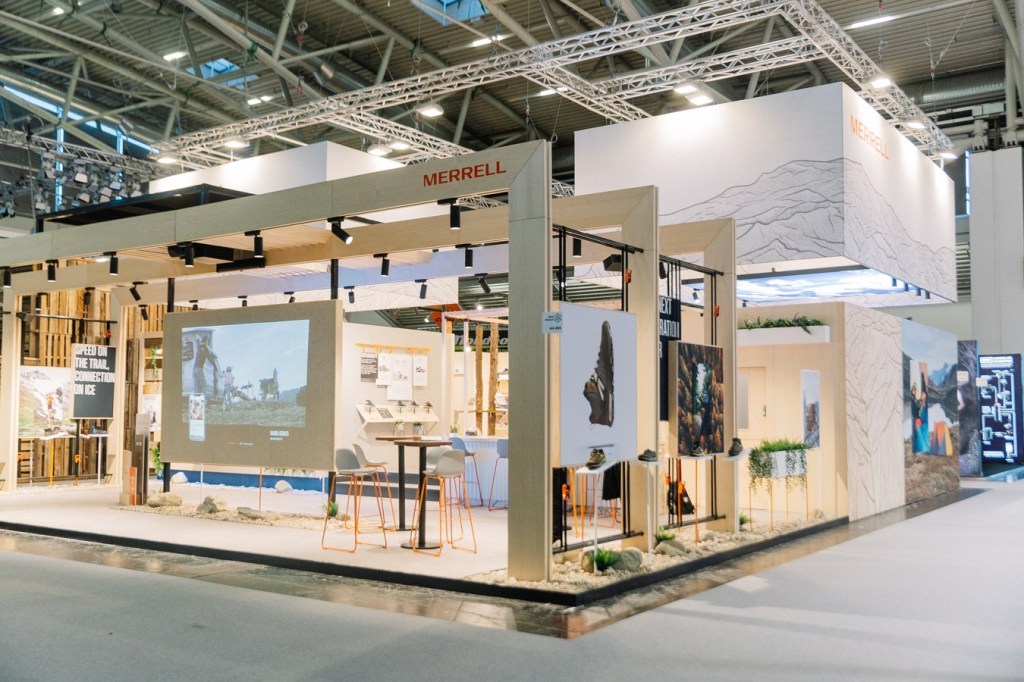
A trade show stand is one of the few marketing investments where everything has to work on a single day, in a venue you do not control, in front of the people whose opinion matters most. There is no soft launch and no opportunity to fix a structural problem quietly. Choosing the right exhibition company in Singapore is therefore less about comparing visuals in a pitch deck and more about assessing whether a contractor can deliver reliably under those conditions.
Understand What You Are Actually Buying
The term covers a wide range of businesses. Some are design studios that outsource fabrication entirely. Some are workshops that build to a client’s drawings but offer no creative input. Others handle the full sequence concept, design development, engineering, fabrication, logistics, on-site installation, dismantling and storage. None of these models is wrong, but they suit different briefs. A brand with an in-house design team may want a builder; a brand starting from a blank page usually needs the full service. Establish which you are engaging before comparing quotations, because the numbers are not equivalent.
In-House Production Versus Subcontracting
This is the question that most affects delivery risk. A contractor with its own workshop controls its schedule, can absorb a late change, and can fix a fabrication error without negotiating with a third party. A contractor that subcontracts everything is dependent on a supply chain during exactly the period when everyone in the industry is busiest. Asking to visit the production facility is a reasonable request and the response is informative in itself. Providers who handle production end to end usually welcome the visit, because the workshop is the strongest part of their case.
Venue Knowledge Matters More Than It Sounds
Every major venue has its own rules height restrictions, rigging permissions, floor loading limits, build-up and tear-down windows, power supply arrangements, fire regulations and approved contractor lists. A contractor who works regularly at your chosen venue knows what will be approved and what will be rejected at submission, which avoids a redesign cycle two weeks before the show. Ask directly which venues they work in most often and request examples of stands built there rather than generic portfolio images.
Assessing the Portfolio Properly
Renders are easy; delivered stands are the evidence. Ask for photographs of completed builds rather than visualisations, ideally including wide shots that show how the stand sat in its surroundings. Ask about stand size and budget band so you can judge whether their experience matches your scale a company that excels at nine-square-metre shell schemes may not be equipped for a two-storey custom build, and the reverse is equally true. Speaking to two or three past clients about how the contractor handled problems is worth more than any case study. Specialists in booth design for exhibition projects should be able to point you toward those references without hesitation.
What a Complete Quotation Includes
Comparing prices only works when the scope matches. A proper quotation itemises design fees, materials and fabrication, graphics production, electrical and lighting, AV equipment, furniture, transport, installation labour, dismantling, waste disposal, storage of reusable elements, and venue-related charges. Common omissions that appear later include rigging, additional power, late-change fees and overtime for extended build hours. Ask explicitly what is excluded, since that list tells you more than the inclusions do.
Reusability and Storage
If you exhibit several times a year, a stand designed as a modular system that reconfigures for different footprints will cost more initially and considerably less over three years. This only works if the contractor offers proper storage with a condition-checked inventory, and if the system was genuinely designed to be reconfigured rather than described that way after the fact. Ask to see the same system deployed at two different sizes.
Project Management and Communication
Delivery quality often comes down to process rather than talent. You want a single named project manager, a written schedule with milestone dates for design sign-off, graphics deadline and production start, and a clear change control procedure that states what a late alteration costs. Ask who will be physically present during build-up and who to call at eleven at night when something is wrong. Vague answers here are a reliable predictor of a difficult project.
Beyond the Trade Show Floor
Many brands eventually want more than a stand a brand activation, a showroom, a pop-up or a permanent visitor space. Contractors with capability in experiential design can carry a visual language across those formats rather than treating each as an unrelated project, which protects consistency and usually reduces cost through shared assets. Worth asking about even if the immediate brief is a single exhibition.
Making the Decision
Shortlist on demonstrated delivery at your scale and in your venues, then compare on scope rather than headline price. Meet the project manager, not only the salesperson. Confirm insurance, check financial stability if the contract is significant, and get the schedule in writing before signing. The cheapest quotation in this industry is frequently the one with the most exclusions and the cost of a stand that is not finished when the doors open is not measured in the difference between two proposals.

